Last updated: September 2026
A bad haircut grows out in six weeks. A bad colour, a chemical service done on hair that could not take it, or an allergic reaction to dye are different problems entirely — they can take months to correct and some of them are avoidable only before the appointment, not after.
This guide covers how to find a salon or barber that matches what you actually want, what the consultation should look like, the safety steps a good salon insists on even when you would rather skip them, and the signs worth walking out over.
Match the Place to the Job
Most disappointing appointments are a matching problem rather than a competence problem. Decide which of these you are actually booking before you search.
- A maintained short cut. A barber shop, booked with the same barber, every three to four weeks.
- A restyle or a big change. A salon, a senior stylist, and a booked consultation rather than a walk-in.
- Colour, especially a lightening or correction. A colour specialist. This is the service where the wrong choice costs the most.
- Curly or textured hair. Someone who specialises in it. Cutting curls dry versus wet is a genuine technical difference, not a preference.
- Children. A shop that is comfortable with children and does not rush them.
- Weaves or extensions. The AAD advises choosing lightweight options and going to a salon that specialises in them.
A salon that is excellent at one of these may be ordinary at another. The question is not “is this place good” but “is this place good at this”.
Check the Licence
The Bureau of Labor Statistics confirms that all states require barbers, hairstylists and cosmetologists to be licensed, which means completing a state-approved program and passing an exam with written and practical components. Some states also require health and safety training.
Licences are usually displayed at the station or near reception, and your state board of cosmetology or barbering publishes a searchable register. It takes a minute and it is the only check that a good website cannot fake.

The Consultation Predicts the Result
More than any review, the five minutes before scissors come out tells you how the appointment will go.
- Did they look at and touch your hair before agreeing to anything? Density, texture and condition decide what is achievable.
- Did they ask what you do with it day to day? A cut that needs 20 minutes of styling is a bad cut for someone who has five.
- Did they ask about your hair history? Previous colour, box dye, relaxers, keratin — all of it changes what colour can safely do.
- Did they manage expectations honestly? “We can get you two shades lighter today and the rest next time” is a better answer than an unqualified yes.
- Did they quote the full price including any toner, gloss or extra product, before starting?
Bring photographs, and bring one of hair you do not want as well as hair you do. The second picture is more useful than the first, because it eliminates the ambiguity in words like “shorter” and “warmer”.
The honest-answer test
Show a photo of hair two or three shades lighter than yours and see what happens. A stylist who explains how many sessions it would take, what it would do to your hair, and what they would do today has just shown you how they work. One who says “no problem” without touching your hair has shown you something too.
Colour: The Safety Step Most People Skip
Hair dye can cause allergic reactions, and the FDA’s guidance is specific: do a patch test before each application. Rub a small amount of the dye on the inside of your elbow or behind your ear, leave it for two days, and do not use it on your hair if a rash develops.
“Before each application” is the part people are surprised by. Sensitivity can develop over time, so having tolerated a colour previously is not a guarantee.
This makes a practical selection criterion: does the salon offer a patch test before a colour appointment? A salon that books you in for one 48 hours beforehand is following the guidance. One that waves the question away is not.
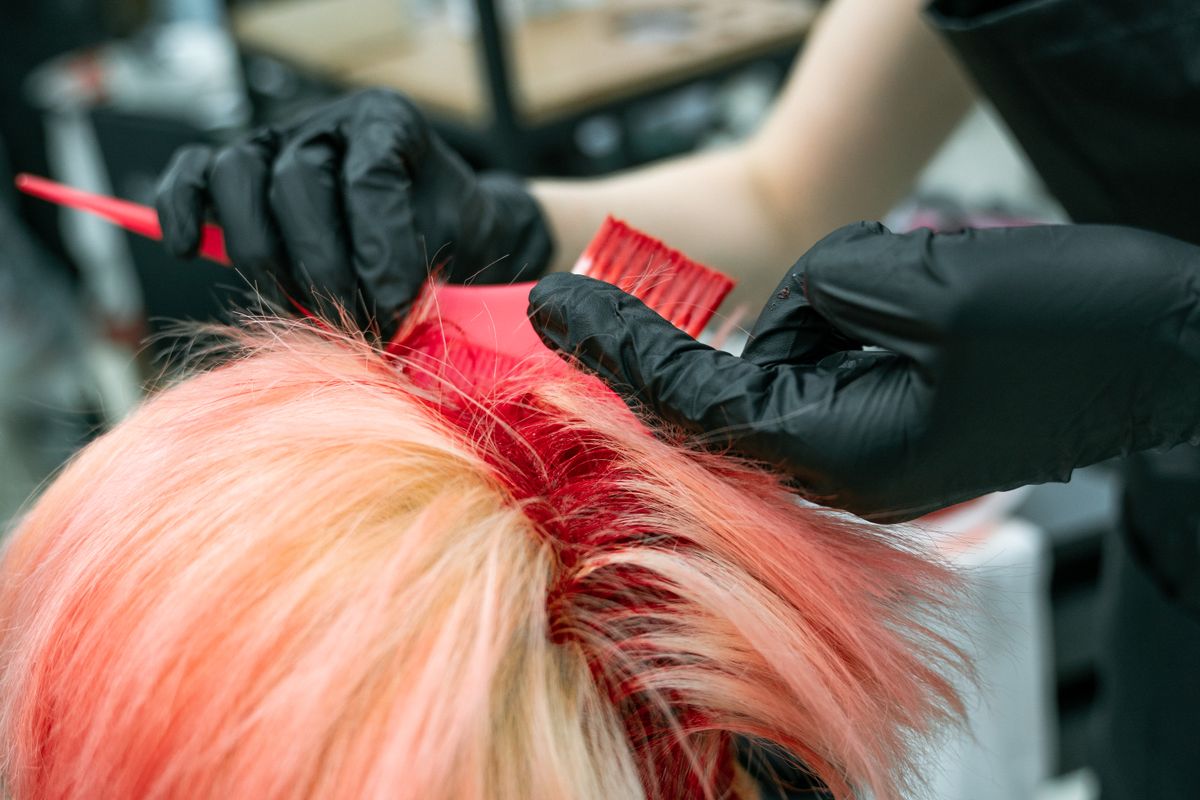
The FDA’s other points for hair dye are worth knowing as a client: follow the package directions and the caution and warning statements, do not leave dye on longer than instructed, gloves should be worn during application, products should never be mixed, the scalp should be rinsed thoroughly afterwards, and hair dyes should never be used on eyebrows or eyelashes — the FDA warns this can cause blindness. If a salon offers to tint your brows or lashes with hair dye, that is a hard no.
What a Good Salon Will Refuse to Do
As with any trade, the willingness to turn down work is the strongest signal available.
- Two chemical services in one visit. The AAD advises having only one chemical treatment at a time. If you are combining, relax or perm first and colour two weeks later — not both in one afternoon.
- Touch-ups too close together. The AAD suggests spacing chemical touch-ups 8 to 10 weeks apart in winter.
- Lightening hair that cannot take it. A stylist who suggests a staged plan over several appointments is protecting your hair, not upselling you.
- Colouring over an unknown history. Box dye and henna can react unpredictably with salon colour, and a good colourist asks before mixing anything.
- Working on an irritated or broken scalp. That is a “come back when it has settled” situation.
- Heavy extensions on fine hair. The AAD advises lightweight options, worn for no more than two to three months, with the scalp kept clean and styles alternated.
None of these refusals are good for the salon’s takings that day. That is exactly why they are worth looking for.
Hygiene and the Basics
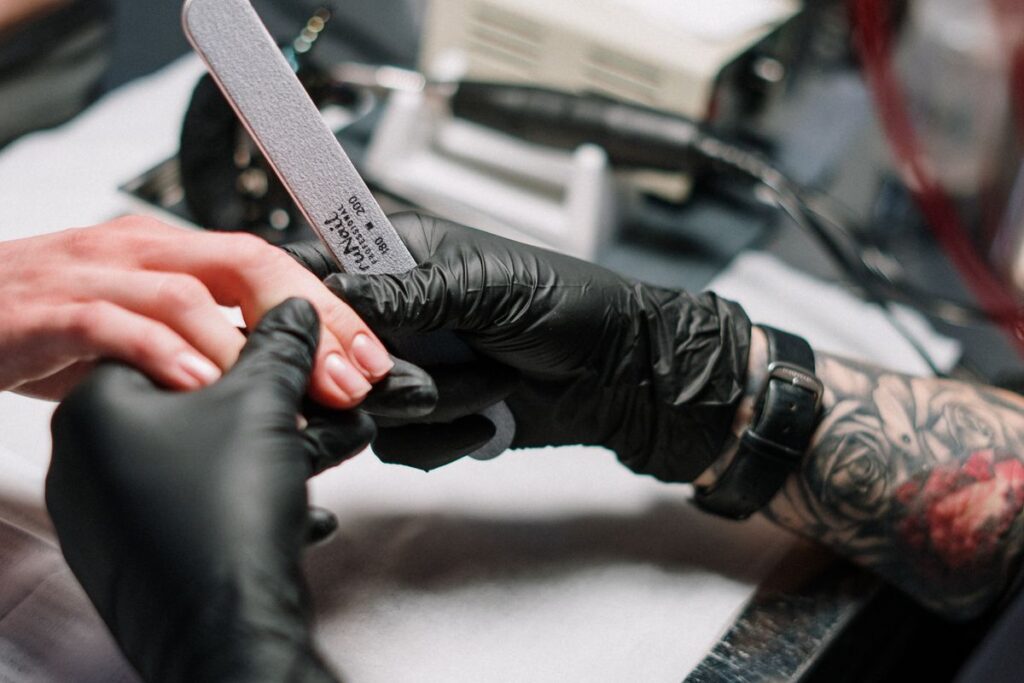
Hair work is lower-risk than nail work, but the same principles apply and they are visible from the chair.
- A clean cape or a fresh neck strip for each client
- Combs and brushes cleaned between clients rather than pulled from a pile
- Clipper blades cleaned and disinfected between heads, which is the main one in a barber shop
- Hair swept from the floor between clients, not at the end of the day
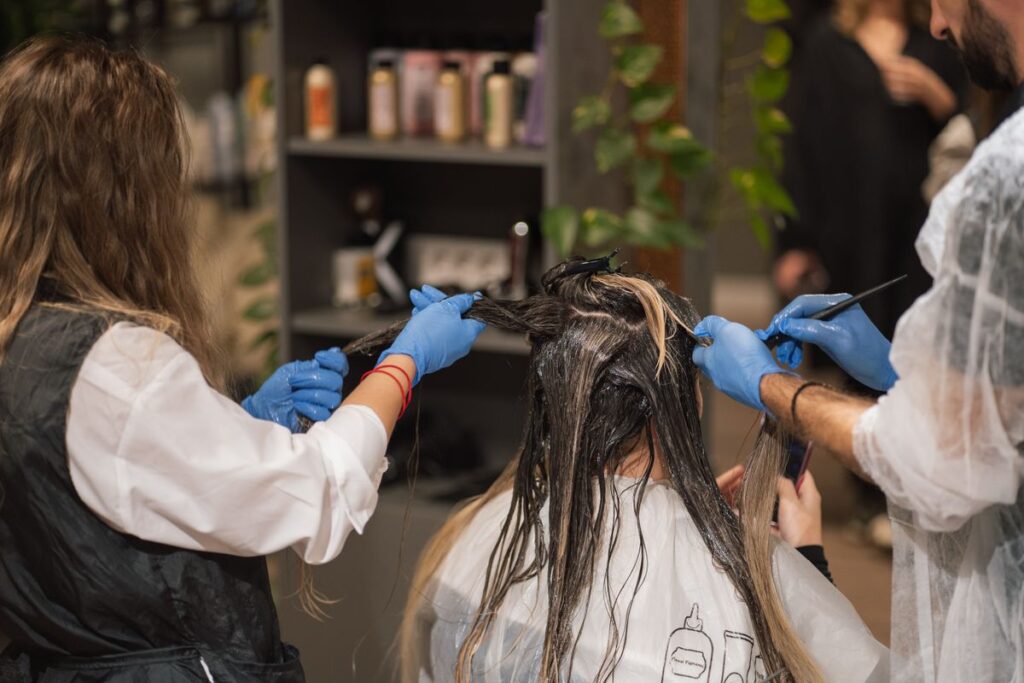
- Gloves worn for colour, and a tidy colour bar rather than a shelf of half-used tubes
If a razor is used on your neck, it should be a fresh blade taken out of a wrapper in front of you. That one is not negotiable.
Reading Reviews and Portfolios
Look at the individual stylist, not just the salon. Most salons post work credited to the person who did it, and that is who you book — a salon’s reputation is an average of very different people.
Look for hair like yours in the portfolio: your texture, your density, your starting colour. A feed full of blonde balayage on fine straight hair tells you little about how they handle thick curls, and vice versa.
In reviews, read for patterns rather than verdicts. Repeated mentions of running late, of prices differing from the quote, of colour needing correction, or of not being listened to are structural. One furious review among many measured ones usually is not.
Money, Booking and Policies
Settle these before the appointment rather than at the desk afterwards.
- The full price for what you are booking, including any toner or gloss on colour.
- Whether the cut is included with colour or charged separately.
- Whether long or thick hair carries a surcharge.
- Which stylist level you are being booked with, and what that column costs.
- The fix policy — if the colour is not right, is a correction free and within what window?
- Cancellation notice and whether a deposit is taken.
- How long the appointment will take, so a three-hour colour does not collide with your afternoon.
Our guide to what haircuts and colour typically cost in the USA sets out the published ranges if you want to check a quote before you commit.
Red Flags
- No consultation. Straight to the chair without anyone looking at your hair.
- “No problem” to any request, however drastic, without touching your hair first.
- Dismissing a patch test before colour.
- Willingness to do two chemical services in one visit.
- Offering to tint eyebrows or lashes with hair dye.
- Prices that only appear at the till.
- Not listening, or talking over your answers in the consultation.
- A used razor blade, or combs pulled from a pile of used ones.
Once You Find Someone Good
Book with the same person and rebook before you leave the chair. Good stylists fill up weeks ahead, and the appointment you take today is cheaper than the emergency one you need in six weeks.
Tell them honestly what happened since last time — what grew out badly, what you could not recreate at home, what faded fast. And take their aftercare seriously: the AAD’s advice for chemically treated hair includes deep conditioning and UV protection, and following it is what keeps the next appointment from being a repair job.
Frequently Asked Questions
Sources
- US Food and Drug Administration — Cosmetics Safety Q&A: Hair Dyes
- American Academy of Dermatology — Hair Care Habits That Can Damage Your Hair
- US Bureau of Labor Statistics — Barbers, Hairstylists, and Cosmetologists
Run a salon or barber shop? If you consult properly, patch test before colour and turn down work that would damage someone’s hair, a free Ypages listing puts you in front of people looking for exactly that. Add your business free.
This article covers choosing a salon or barber shop. If you have a reaction to a product, a scalp condition or unexplained hair loss, see a dermatologist or your doctor. Licensing is handled by state boards of cosmetology and barbering, so verify through the board for your own state.