Last updated: September 2026
A basic manicure costs around $20 to $55 in the USA, with a median close to $37. Gel typically runs $25 to $70, an acrylic full set $30 to $130 depending where you are, and a Russian manicure $70 to $150. Where you land inside those ranges depends less on the salon’s decor than on three things: your city, how long the service actually takes, and whether removals and nail art are inside the price or bolted on afterwards.
This guide breaks down what each service costs, what the extras add, how tipping works, and — the part price guides usually skip — what an unusually low price for certain services can be telling you.
Manicure Prices by Type
Figures below are drawn from 2026 nail salon pricing data. Ranges overlap between sources, which is itself a fair reflection of how much this varies by market.
| Service | Published US range | What you are paying for |
|---|---|---|
| Basic or classic manicure | $20–$55 | Shaping, cuticle work, regular polish |
| Polish change only | $8–$16 | Repaint, no shaping or cuticle work |
| French manicure | $12–$55 | Added tip work, priced as an upgrade or a full service |
| Gel manicure | $25–$70 | Cured polish that lasts weeks rather than days |
| Gel infills | $18–$28 | Maintaining an existing set |
| Acrylic full set | $30–$130 | Extensions built on the natural nail |
| Acrylic infills | $25–$45 | Filling regrowth every two to three weeks |
| Dip powder | $35–$75 | Powder-and-resin system, no lamp curing |
| BIAB overlay | $45–$85 | Builder gel strengthening layer on natural nails |
| Gel-X extensions | $55–$110 | Pre-formed soft gel tips |
| Russian manicure | $70–$150 | Electric-file cuticle work, longer appointment |
| Deluxe or spa manicure | $35–$60 | Basic plus exfoliation, massage, mask |
Location moves all of it. Published state figures put New York highest at around $75 on average and Maine lowest at about $35 — and one source notes a gel manicure in Manhattan costing close to double the same service in Chicago.
The Extras That Change the Bill
The advertised price is rarely the price. These are the line items that appear at the desk.
| Add-on | Published range |
|---|---|
| Gel removal | $9–$20 |
| Acrylic removal | $15–$25 |
| Hard gel or dip powder removal | $20–$35 |
| Simple nail art | $6–$20 |
| Detailed freehand art with embellishments | $40–$80 |
| Skin exfoliation | $13–$22 |
| Paraffin wax treatment | $12–$55 |
| Pedicure, standard | $30–$45 |
| Mani-pedi together | $50–$130 |
Removal is the one people forget. If you are switching salons, or moving from acrylic to natural nails, budget for it as a separate service. Some salons include removal free when you are having a new set applied with them and charge for it as a standalone — worth asking on the phone rather than discovering at the till.
Three questions that stop the price moving
Is removal of what I currently have included? Is that shape and length included, or extra? And is nail art priced per nail or per set? Asking these when booking is the difference between a $40 appointment and a $75 one.
What Actually Drives the Price
- Chair time. This is the real unit of cost. A Russian manicure costs more than a basic one largely because it takes considerably longer.
- Product cost. Builder gels, quality acrylic systems and Gel-X tips cost the salon more per set than regular polish.
- Technician experience. Many salons price by technician level, and a senior tech’s column costs more.
- Length and shape. Long stiletto or coffin shapes take more product and more filing than a short square.
- City and rent. The single biggest swing, as the New York and Maine figures show.
- Appointment versus walk-in. Some salons price weekend and evening slots differently.
- Whether infills are offered. A salon that will fill a set rather than removing and rebuilding it saves you money every few weeks.
What the Cheapest Prices Can Be Telling You
Most low-priced salons are simply operating in cheaper premises with efficient service, and there is nothing wrong with that. But there is one specific thing worth knowing about the very cheapest acrylic work, and it comes from the FDA rather than from salon gossip.
Acrylic nail products are built on methacrylate monomers. The FDA removed methyl methacrylate (MMA) products from the market in the 1970s following injury complaints; ethyl methacrylate (EMA) remains permitted. MMA is markedly cheaper, which is exactly why it occasionally resurfaces in low-cost work.
None of that makes an inexpensive manicure a bad idea. It does mean it is entirely reasonable to ask what products a salon uses, and that a salon which cannot or will not tell you has answered a different question.
Product safety and the damage question go well beyond price, and we cover them properly elsewhere: our comparison of gel versus acrylic nails sets out what dermatologists actually recommend and where the damage really comes from, and our guide to choosing a nail salon covers the tool and footbath questions worth asking before you book anywhere.
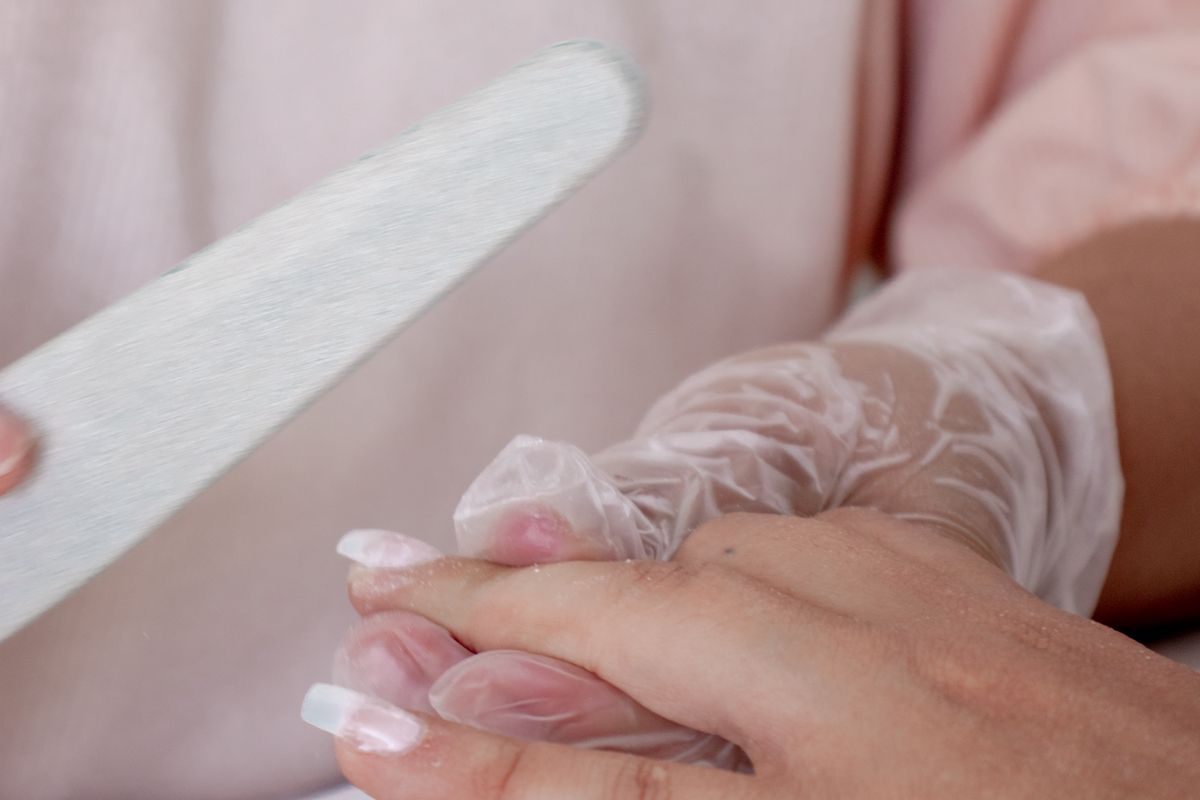
Cost Per Wear, Not Cost Per Visit
Comparing a $30 basic manicure with a $55 gel one on price alone gets the answer wrong, because they last different lengths of time.
Regular polish chips within days for most people. Gel, acrylic and dip systems are designed to last weeks and are maintained by infilling rather than redoing. So the number worth working out is what you spend over a month, including removals and fills, at the frequency you actually book.
Run it both ways for your own habits. Someone having a basic manicure fortnightly and someone having gel every three weeks with infills can end up spending similar amounts — but only one of them has presentable nails on week two.
Tipping
Published guidance puts the standard tip at 15 to 20 percent of the service cost, commonly working out at $5 to $15 depending on the service and the market.
Two practical notes. Tip on the pre-discount price if you have used an offer, and tip the technician who did the work if more than one person was involved — in salons where different technicians handle removal, application and art, ask how tips are shared. And factor the tip into your budget rather than treating it as an afterthought, because 20 percent on a $110 set is not a rounding error.
How to Spend Less Without Getting Less
- Book infills instead of new sets. Infills sit well below a full set and are the main saving available on gel and acrylic.
- Keep the length modest. Shorter nails use less product, take less time and last better through everyday use.
- Choose art on a few nails rather than all ten. Accent nails give most of the effect at a fraction of the cost.
- Go midweek and off-peak where the salon prices slots differently.
- Stay with one salon so removal is included in your next set and your technician knows your nails.
- Do not pick or peel gel off. It takes the top layer of the nail plate with it, and the next few appointments end up repairing that.
The one saving not worth making is skipping professional removal to save $15, then damaging nails that take months to grow out.
Frequently Asked Questions
Sources
- US Food and Drug Administration — Nail Care Products
- Airtasker — How Much Does a Manicure Cost in the US?
- NailAtlas — Nail Salon Pricing Guide
Run a nail salon? Ypages lists businesses across all 50 states, free — and the people reading a price guide are usually looking for somewhere new to book. Add your business free.
Prices in this article are published national and state estimates and vary considerably by market, salon and technician level. Treat them as a way to sanity-check a quote rather than a price any particular salon should match. If you have a nail problem, a reaction to a product or a suspected infection, see a dermatologist or your doctor.