Published: September 2026 | Reading Time: 12 minutes
Most people choose a nail salon on price, proximity and how the finished sets look on its social media. Those are reasonable filters, but they miss the one thing you cannot judge from a photograph: whether the tools touching your skin have been properly cleaned between clients.
This guide covers the licences worth looking for, what dermatologists actually advise you to check, the tool and footbath questions that matter most, what a good salon will refuse to do for you, and the signs worth leaving over.
Start With the Licences
Nail technicians and salons are licensed at state level, generally through a board of cosmetology or barbering. Two separate things are usually involved: the salon’s own establishment licence, and each technician’s individual licence.
Most states require these to be displayed where clients can see them, so the first check costs you nothing but a glance at the wall. The AAD’s own guidance for choosing a salon puts this first too, advising you to confirm the technician has the necessary experience and licence.
If nothing is displayed, ask. If the answer is vague, that is your answer. Your state board’s website will also let you check whether a licence is current, and in many states it records disciplinary action against salons as well.
What Dermatologists Tell You to Check
The American Academy of Dermatology publishes manicure and pedicure safety guidance, and it is refreshingly practical — a list of things any client can observe or ask about without needing expertise.
- Are the stations clean? If the salon does not appear clean, the AAD’s advice is simply to move on.
- Ask how they clean their tools. Not whether — how. The question itself is normal and a good salon answers it easily.
- Does the technician wash their hands between clients? Watch for it before you sit down.
- Are dirty tools visible anywhere? Implements sitting out unwrapped between clients tell you how the place runs.
- Are pedicure footbaths and filters thoroughly disinfected? The filter is the part most often skipped.
The AAD also offers a solution for anyone who goes often: buy your own set of tools and take them with you. It removes the cross-contamination question entirely, and most salons are perfectly happy to use them.
How to Ask the Tool Question Properly
“Do you sterilise your tools?” invites a yes. A better question is “what happens to these between clients?” — because it asks for a description rather than a reassurance.
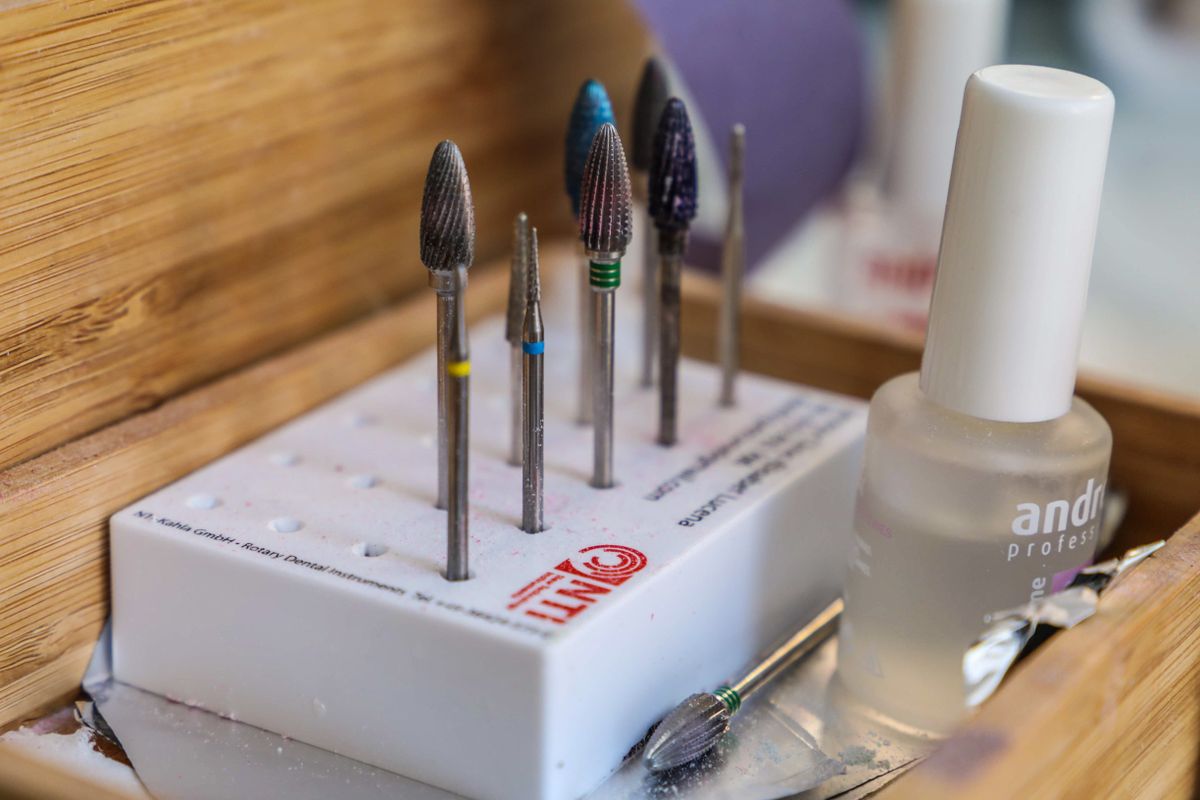
What you want to hear falls into two categories. Single-use items — nail files, buffers, wooden sticks, pumice — should be new for you or kept as your own, because porous materials cannot be properly disinfected. Reusable metal implements — nippers, pushers, clippers — should be cleaned, disinfected and ideally sterilised, and should arrive at your station in a sealed pouch that is opened in front of you.
The three-second version of this check
Where did the file come from, and where does it go afterwards? If it came out of a drawer of used files and goes back into it, that file has been on other people’s nails. A salon that hands you a new file, or keeps yours in a labelled bag, has already answered the harder questions too.
The electric file deserves the same question. Its bits are reusable metal and need the same treatment as nippers, and a bit that goes from client to client unwashed is exactly the kind of detail a busy salon skips.
Footbaths Deserve Their Own Check
If you have pedicures, this is the highest-stakes hygiene question in the salon, and the AAD singles it out: footbaths and their filters need to be thoroughly disinfected.
The concern is not theoretical. Research published in the CDC’s Emerging Infectious Diseases journal documented mycobacteria in nail salon whirlpool footbaths, which is why the plumbing and filters behind the visible bowl matter as much as the bowl itself.
Two practical responses. Ask what happens between clients and how often the filters are cleaned — a salon with a routine will describe it. And consider a salon using disposable liners or pipeless bowls, which remove much of the problem by design.
One more from the AAD, and it surprises people: do not shave your legs before a pedicure. It creates a risk of infection. Shave at least 24 hours afterwards instead.
What a Good Salon Will Refuse to Do
This is a more revealing test than anything on the price list, because it means turning down work.
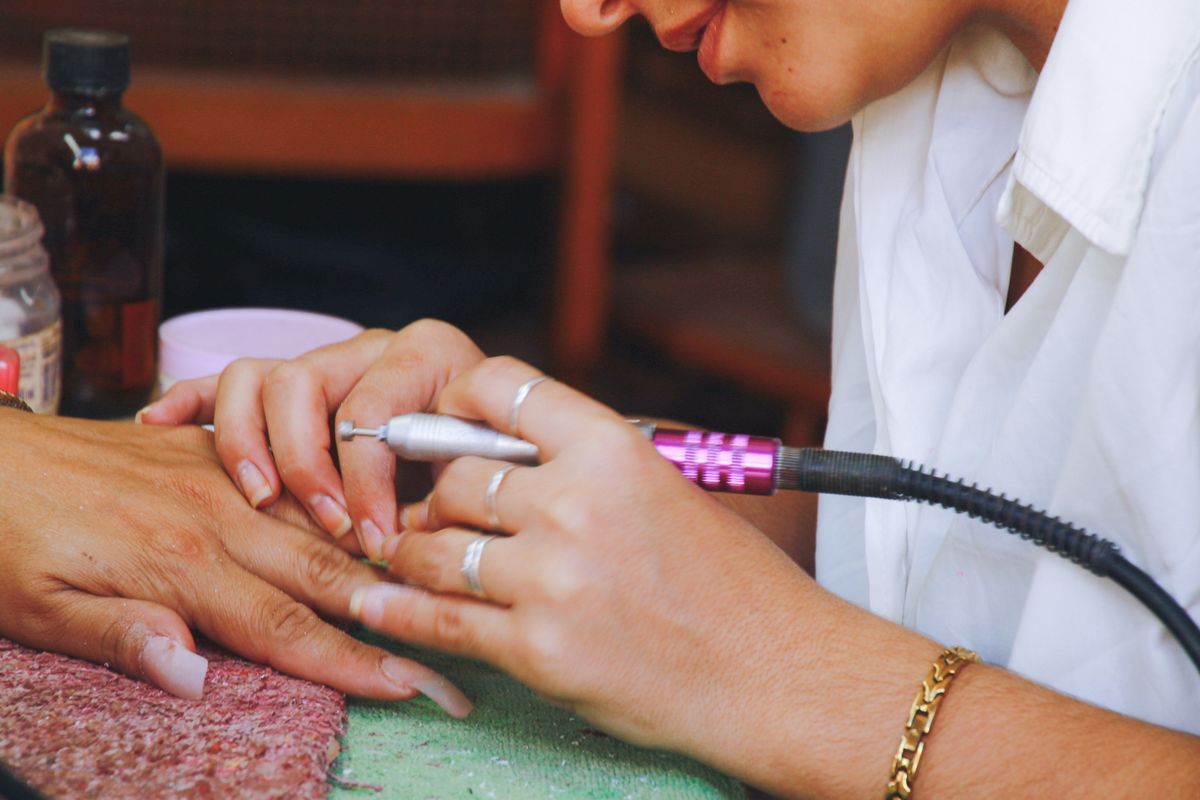
- Cut your cuticles. The AAD advises against cutting or forcefully pushing back cuticles, because they protect the nail and surrounding skin from infection. Gentle pushing is fine; cutting is not.
- Cover up a nail problem with artificial nails. The AAD warns this can make the problem worse rather than solving it.
- Apply artificial nails over a suspected fungal infection, or on nails that are already very brittle — the AAD advises avoiding artificial nails in both situations.
- Work around an obvious infection, cut or open skin rather than telling you to see a doctor first.
- File hard enough to hurt. Pain or heat during filing is information, and a good technician stops when you mention it.
A salon willing to say “we should not do that today” is protecting you at the cost of its own booking. That is worth more than a loyalty card.
Ventilation and the Smell Test
Walk in and notice the air. A strong chemical smell that makes your eyes water suggests the extraction is not keeping up, and the FDA’s guidance on nail products specifically includes ensuring good ventilation when they are used.
Good signs are unglamorous: source-capture extraction at the stations, real airflow rather than a scented candle masking it, and technicians wearing masks when working with acrylic. This matters more for the people who work there all day than for you on a monthly visit — but a salon that has invested in it has thought about more than the finish.
Skill, Menu and Price
Once hygiene is settled, the rest is about matching the salon to what you actually want.
- Look at their work, not their stock photos. Recent posts of real clients, ideally with the technician credited, tell you who to book with.
- Match the specialism. Sculpted acrylic, intricate art and natural-nail care are different skills; the guide to gel versus acrylic covers which suits what.
- Ask about removal. Whether they will remove another salon’s work, and what it costs.
- Check what “extra” means on their menu. Shape, length and art are commonly priced separately — our nail salon price guide sets out the usual ranges.
- Ask about their fix policy. If a nail lifts within a few days, does it get repaired free, and within what window?
- Booking and timekeeping. A salon that runs 40 minutes late every visit is a salon you will leave eventually.
Red Flags
- No licences displayed, and vagueness when you ask.
- Files and buffers pulled from a communal drawer rather than opened new.
- Implements sitting out unwrapped between clients.
- Irritation at the question of how tools are cleaned.
- Cuticles cut as standard, without asking.
- Filing that hurts or generates heat, and a technician who carries on when told.
- Overwhelming fumes with no visible extraction.
- Willingness to work over an obvious infection.
- Prices that only appear at the till.
You are allowed to leave. Walking out of a salon before an appointment is far cheaper than the alternative, and the AAD’s own advice on an unclean salon is exactly that — move on.
Once You Find a Good One
Book with the same technician. They learn the shape of your nail beds, what your nails tolerate, how fast you grow out and what lifted last time. That accumulated knowledge is worth more than any product on the shelf.
Between visits, the AAD suggests applying a moisturiser to your nails after polish is removed. And tell your technician what happened since your last appointment — what lifted, what broke, what stained. Good technicians adjust, but only if you tell them.
Frequently Asked Questions
Sources
- American Academy of Dermatology — Manicure and Pedicure Safety
- CDC Emerging Infectious Diseases — Mycobacteria in Nail Salon Whirlpool Footbaths
- US Food and Drug Administration — Nail Care Products
This article covers choosing and assessing a salon. If you have a nail infection, a persistent nail problem or a reaction to a product, see a dermatologist or your doctor.