
Last updated: September 2026
Most people choose a restaurant by searching a cuisine and picking whatever has four and a half stars nearby. That works for a Tuesday and fails badly for a first date, a business lunch, a birthday with grandparents and a toddler, or a table where someone has a serious food allergy. The occasion decides what “best” means — and the checks that actually separate a good choice from a bad one are not the ones most people run. This guide covers how to match a restaurant to the occasion, how to read reviews now that fake ones are federally prohibited, how to check a place’s health inspection yourself, and what the law does and does not require a restaurant to tell you.
Start With the Occasion, Not the Cuisine
The same restaurant can be excellent and completely wrong. A loud, brilliant small-plates place is a great night out and a terrible venue for a conversation you need to remember. Decide what the meal has to do before you decide what you want to eat.
What each occasion actually demands
| Occasion | What matters most | What to check before booking |
|---|---|---|
| First date | Noise low enough to talk, not too formal, easy exit | Bar seating or small tables, mid-price, no set menu |
| Business lunch | Quiet, fast service, predictable timing | Express lunch menu, table spacing, whether they split bills |
| Family with young children | Tolerance, speed, space for a pushchair | High chairs, early sitting, a menu children will eat from |
| Large group celebration | A table that actually fits, one bill or many | Group policy, set menu requirement, automatic service charge |
| Anniversary or milestone | Atmosphere and pacing | Booking window, corkage, whether they mark occasions |
| Dietary restriction at the table | Kitchen competence and honesty | Call ahead and ask specifics, not “do you have options” |
Two practical filters people forget: noise and timing. Ask what time the room gets loud, and ask how long a table is held. A restaurant that gives you the table for ninety minutes is fine for lunch and wrong for an anniversary.
Read Reviews Knowing What Is Now Illegal
Review manipulation is no longer just bad behaviour. In August 2024 the Federal Trade Commission announced a final rule banning fake reviews and testimonials, and knowing what it prohibits tells you exactly what to look for.
Six practices the rule bans
- Fake or false reviews — including AI-generated ones and reviews from people with no actual experience of the business.
- Buying positive or negative reviews — compensation conditioned on expressing a particular sentiment, explicitly or implicitly.
- Undisclosed insider reviews — from officers, managers or employees without disclosing the connection, and solicited reviews from their relatives.
- Fake independent review sites — a business claiming a site it controls offers independent reviews of its own category.
- Review suppression — using groundless legal threats or intimidation to remove negative reviews, or implying the displayed reviews are all of them when negatives were deleted.
- Fake social media indicators — bought followers or views misrepresenting influence.
How to use that when reading
Sort by most recent rather than most relevant, since a restaurant can change hands or lose a chef and the average rating lags by months. Read the three-star reviews first — they are usually the most specific and the least emotional. Look for reviews that name a dish, a server or a date rather than praising “the vibe”. Be wary of clusters of glowing reviews posted within a few days of each other, and of a business whose responses to criticism are aggressive rather than curious.
There is no national restaurant grade
The FDA publishes a model Food Code, but it is guidance, not binding law. The FDA notes that restaurant and retail food store oversight in the United States is typically handled at the state and local levels rather than federally, and states adopt the model voluntarily — as of 2024, agencies covering roughly 65 percent of the population had adopted one of the three most recent versions. So an inspection score means whatever your county says it means, and a letter grade in one city is not comparable to a numeric score in another. Look up the actual report on your local health department’s site rather than trusting a sticker in the window.
Check the Health Inspection Yourself
This takes two minutes and almost nobody does it. Search your county or city health department alongside “restaurant inspections” and look the place up by name.
What to look at in a report
- The trend, not one score. A single bad inspection followed by a clean re-inspection is a kitchen that fixed something. Three mediocre ones in a row is a pattern.
- The nature of the violations. A missing thermometer and improper cold-holding of cooked food are not equivalent problems.
- Whether violations repeat. The same issue cited across consecutive visits says something about management, not bad luck.
- The date. An excellent report from three years ago tells you about a restaurant that may no longer exist in the same form.
Because standards and scoring differ by jurisdiction, compare restaurants against others in the same county rather than against a number you remember from somewhere else.
What the Menu Tells You Before You Arrive
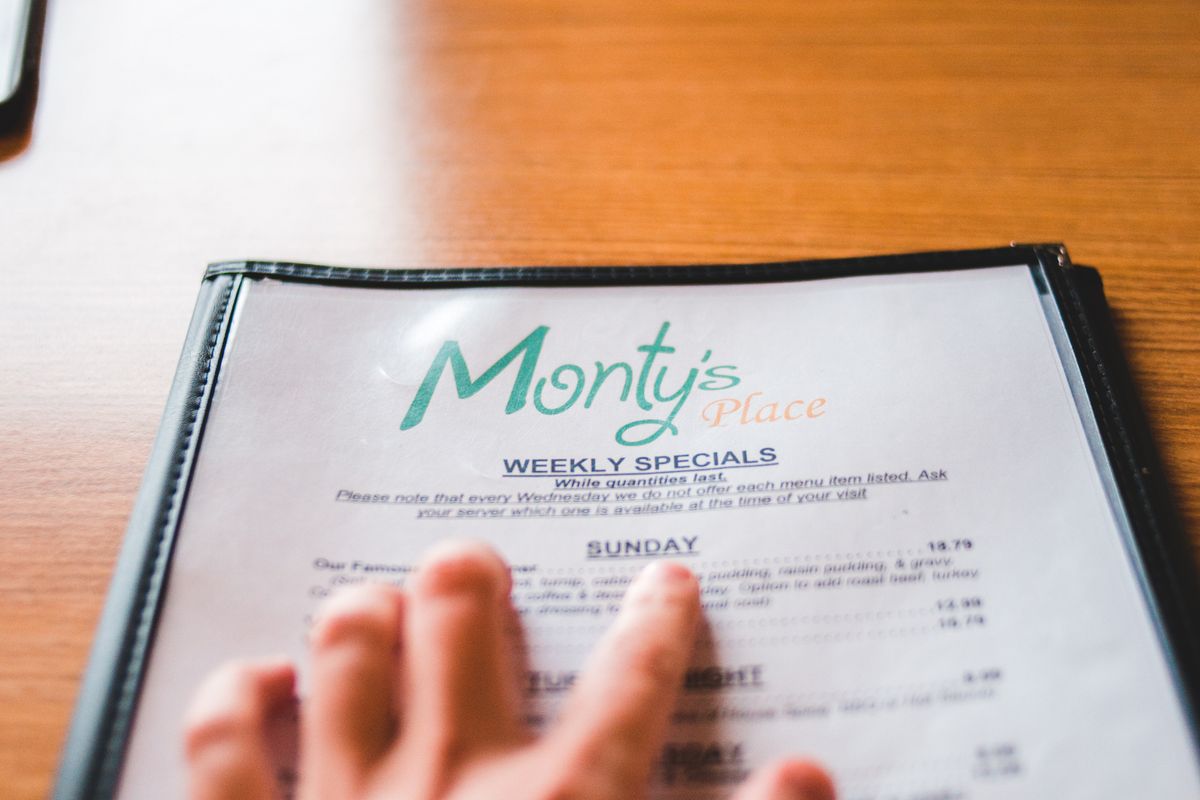
Almost every restaurant posts its menu. Reading it properly answers most of your questions without a phone call.
Signals worth noticing
- Length. A short, focused menu usually means fresher ingredients and a kitchen with a point of view. A menu spanning four cuisines usually means a freezer.
- Whether it changes. A menu with a season or a date on it is a kitchen that cooks. One unchanged for three years is a kitchen that assembles.
- Real prices, published. “Market price” on one or two seafood items is normal. A menu with no prices at all is a red flag for a group booking.
- The group and service-charge policy. Many restaurants add an automatic charge for larger parties. Find the figure before the bill arrives.
- Whether there is a genuine option for every diner. One sad vegetarian pasta is technically an option and practically an insult.
Why calorie counts appear at some places and not others
If you are used to seeing calories on menus, note that this is a chain requirement, not a universal one. FDA menu labeling rules apply to restaurants and similar retail food establishments that are part of a chain with 20 or more locations doing business under the same name and offering substantially the same menu items. Those businesses must disclose calories for standard menu items, display a statement that further written nutrition information is available on request, and provide that fuller breakdown — total fat, saturated fat, trans fat, cholesterol, sodium, carbohydrates, sugars, fibre and protein — when asked.
Independent restaurants are not covered. That is not a criticism of them; it simply means the information does not exist, so if it matters to you, the local place is a conversation rather than a label.
| What you want to know | Chain of 20+ locations | Independent restaurant |
|---|---|---|
| Calories on the menu | Required for standard menu items | Not required |
| Fuller nutrition breakdown | Must be available in writing on request | Not required; ask the kitchen |
| Allergen information on the plate | Not covered by packaged-food labeling law | Not covered by packaged-food labeling law |
| Health inspection record | Published by your local health department | Published by your local health department |
| Ingredient detail on the night | Varies by brand and staff training | Often better, because the cook is on site |
Read that middle row carefully, because it is the one that surprises people: on allergens, a chain and an independent are in the same position, and neither is doing what a supermarket label does.
If Someone at the Table Has a Food Allergy
This is where choosing the right restaurant stops being about preference. The FDA recognises nine major food allergens: milk, eggs, fish, crustacean shellfish, tree nuts, peanuts, wheat, soybeans and sesame — sesame having been added by the FASTER Act, effective from 1 January 2023.
The gap most diners do not know about
Federal allergen labeling law is built around packaged food, not restaurant service. The FDA states that FALCPA’s labeling requirements do not apply to foods placed in a wrapper or container following a customer’s order at the point of purchase, and that the law excludes most foods sold at retail or food service establishments that are not pre-packaged with a label. A restaurant that packages and labels products for retail sale must comply for those items — but the plate coming out of the kitchen is not covered the way a supermarket box is.
So the label does the work in a shop, and the conversation does the work in a restaurant. Choose the restaurant accordingly.
Questions that reveal a competent kitchen
- Call before booking, outside service hours, and ask for a manager or chef rather than whoever answers during a rush.
- Name the allergen specifically instead of asking whether they “cater for allergies”.
- Ask how they prevent cross-contact — separate boards, fresh gloves, a clean pan, changed fryer oil.
- Ask who checks the ingredients on the night, and whether the kitchen keeps supplier ingredient lists.
- Listen for honesty. A kitchen that says “we cannot guarantee a peanut-free environment” is being more useful than one that says everything is fine.
- Repeat the allergy to the server on arrival, not only at booking.

Where to Look Beyond the Obvious
Search results are dominated by whoever spends most on visibility. The better sources are usually quieter.
- Ask people who feed other people. Staff at a good deli, butcher, bakery or coffee shop eat out constantly and have no incentive to flatter anyone.
- Local food writers. A city paper’s restaurant critic has eaten there more than once and is accountable for the opinion.
- Neighbourhood groups. Ask a specific question — “somewhere quiet enough for my parents to hear us on a Saturday” — and the answers get far more useful.
- The restaurant’s own social feed. Not for the marketing, but to see whether specials change, who the chef is, and how recently they posted.
- Walk past at the hour you would eat. Nothing online tells you as much as a full room on a Wednesday night.
A Five-Minute Booking Routine
Run this once and it becomes automatic.
- Name the occasion and the one thing the meal must get right — quiet, speed, atmosphere, or a kitchen that can handle an allergy.
- Shortlist three from a recommendation, a local critic and your own search, in that order of weight.
- Read the current menu on each and eliminate anything without a real option for every person coming.
- Sort reviews by recent and read the three-star ones.
- Check the health inspection record on your local health department’s site.
- Phone rather than book online when anything is non-standard — an allergy, a large group, a milestone, a wheelchair user, or a pushchair.
- Confirm the details that cause friction: how long the table is held, whether bills can be split, and any automatic service charge.
On that last point, an automatic service charge is not the same thing as a tip. The IRS treats a payment as a tip only where the customer voluntarily decides to pay it and sets the amount; an automatic charge added to a bill is a service charge and, when passed to staff, is generally treated as wages from the employer. If you are hosting a group and want the staff tipped, ask what the charge covers before you add to it. Our guide to wedding venue costs covers the same distinction where the sums are much larger.
Frequently Asked Questions
Sources
- Federal Trade Commission — Final Rule Banning Fake Reviews and Testimonials
- US Food and Drug Administration — Adoption of the FDA Food Code by State and Territorial Agencies
- US Food and Drug Administration — Menu Labeling Requirements
- US Food and Drug Administration — Food Allergies and allergen labeling
- Internal Revenue Service — Tip recordkeeping and reporting
If the occasion is large enough that the food is coming to you rather than the other way round, our guides to choosing a catering company and what catering costs for a party cover the same questions on a bigger scale.
Run a restaurant? Ypages lists businesses across all 50 states, free — and diners who research this carefully are the ones who come back. Add your business free.
This article is general information, not food safety or medical advice. Food safety rules, inspection scoring and restaurant policies vary by state and locality — check your own area, and speak to the restaurant directly about any medical dietary need. Anyone with a severe allergy should be guided by their own clinician.