Last updated: September 2026
Car detailing costs roughly $30 to $75 for a basic wash and vacuum, $100 to $200 for a standard detail, and $200 to $400 for a full one. Above that sit paint correction and ceramic coating, which can run into four figures and are a genuinely different purchase rather than a fancier version of the same thing. The reason quotes vary so widely for what sounds like one service is that “detailing” covers everything from an hour with a vacuum to two days of machine polishing. For a single number to anchor against, TopDetailers puts the 2026 national median for a full detail at $264, drawn from 931 detailers across its directory. This guide breaks down what each tier includes, what detailers charge per hour, how vehicle size and your state change the figure, how long the work takes, and what the add-ons actually cost.
- Cost by Package
- How Much Does It Cost to Detail an SUV or Truck?
- How Much Do Detailers Charge Per Hour?
- Car Detailing Prices by State and City
- How Long Does Car Detailing Take?
- How Often Should You Detail Your Car?
- What the Add-Ons Cost
- Why Is Car Detailing So Expensive?
- Is Car Detailing Worth It?
- Is It Cheaper to Wash Your Car at Home?
- How to Spend Less Without Wasting It
- Frequently Asked Questions
- Sources
Cost by Package
Two 2026 guides give overlapping bands from different angles, which is more useful than either alone.
What each source reports
| Package | Car Detailing Finder, 2026 | Housecall Pro, 2026 |
|---|---|---|
| Basic wash and vacuum | $30–$75 | — |
| Interior detail | $100–$175 standard, $175–$300 full | $50–$350 |
| Exterior detail | $75–$150 standard, $150–$250 full | $100–$350 |
| Standard detail | $100–$200 | — |
| Full detail | $200–$400 | $150–$500+ |
| Premium or show detail | $400–$800+ | — |
Housecall Pro also cites a 2026 Autodetailer.com analysis of mobile detailing across major metros, averaging $158 for a basic package, $278 for standard and $443 for premium. Mobile work usually carries a minimum service charge or a per-mile travel fee on top, to cover fuel and the fact that the van cannot do two jobs at once. AutoCleaned puts that premium at $25 to $75, rising to $0.50 to $1.00 a mile for remote addresses.
What each tier actually includes
Package names are not standardised. Two shops both selling a “full detail” can be selling different jobs, which is the single biggest reason two quotes disagree. This is roughly what each tier means in practice.
| Tier | Exterior | Interior |
|---|---|---|
| Basic wash and vacuum | Hand wash, dry, wheels and tyres | Vacuum, windows, quick wipe-down |
| Standard detail | Wash, wheels, wax or spray sealant | Vacuum, plastics and vinyl cleaned, door jambs |
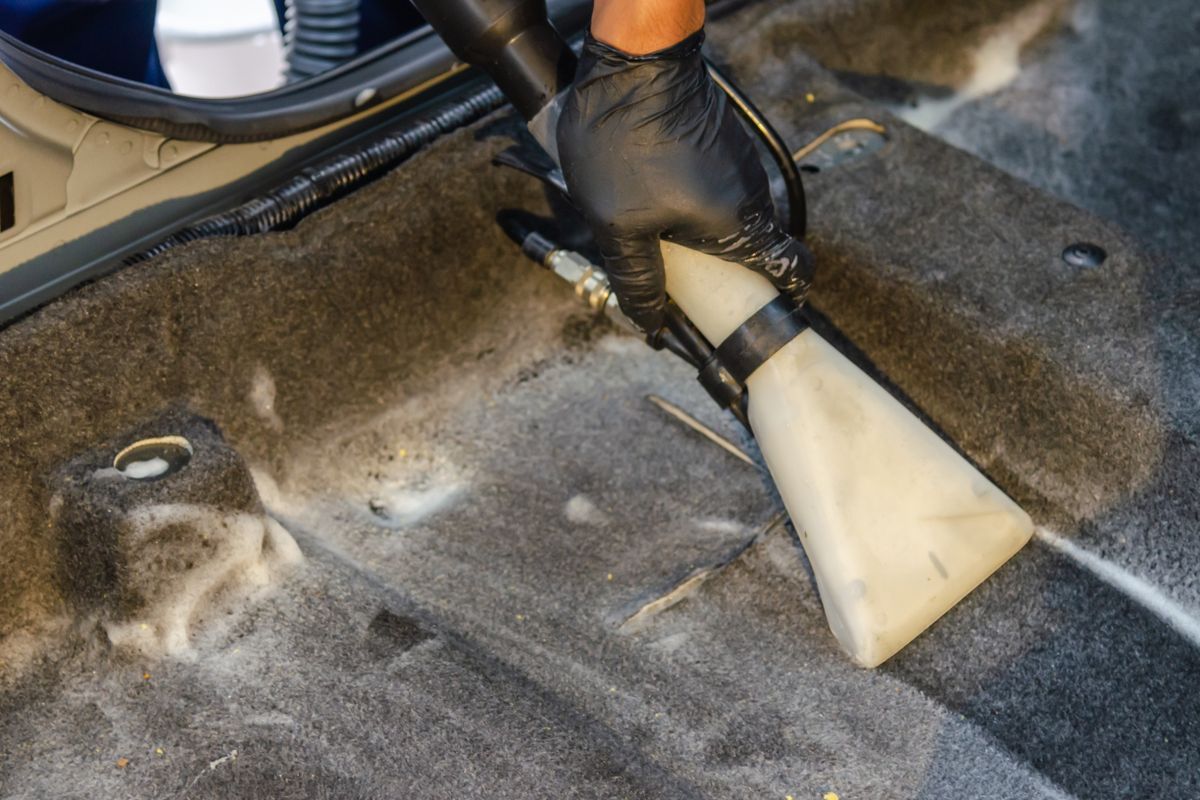
| Full detail | Wash, clay bar decontamination, sealant or wax, trim dressed | Hot water extraction of carpets and cloth, leather cleaned and conditioned, crevice work |
| Premium or show detail | Everything above plus machine polishing or a correction stage | Everything above plus engine bay, headliner, full restoration of trim |
AutoCleaned makes the same point from the other direction, noting that assuming every “full-service” detail includes identical work is one of the commonest mistakes buyers make. Ask for the list before comparing two numbers.
How Much Does It Cost to Detail an SUV or Truck?
Size is not a surcharge for owning a big car. A three-row SUV has roughly twice the glass, twice the carpet and a great deal more paint than a hatchback, and every one of those is hand work.
| Vehicle | Housecall Pro, 2026 |
|---|---|
| Small — coupe or hatchback | $150–$175 |
| Mid-size — sedan or small SUV | $175–$250 |
| Large SUV or truck | $225–$400 |
| Extra-large SUV or van | $500–$650+ |
Car Detailing Finder describes the same effect as a multiplier rather than a bracket, putting the increase at roughly 20 to 40 percent by size, with full-size vans at 1.5 to 2 times a compact. Both are saying the same thing: expect a van to cost close to double a small car for identical work.
How Much Do Detailers Charge Per Hour?
Most detailers advertise packages, but they price in hours. Knowing the hourly rate is the fastest way to sanity-check a quote.
Jobber’s 2026 pricing guide puts detailing labour at $50 to $100 an hour. CostInsightHub’s April 2026 figures are higher at $75 to $120 an hour, and note a roughly 9 percent rise on 2024. Housecall Pro publishes a worked example that shows how the number becomes a price: three hours of labour at $25, plus $35 of materials and $33 of overhead, gives $143 in cost, marked up 20 percent to $171.60 for the customer.
Run the arithmetic against the package prices and they agree. A full detail taking four hours at $75 to $120 an hour lands between $300 and $480 — squarely inside the $200 to $400 band, once you allow that some of those hours are quoted at a lower rate for simpler work. If a quote implies an hourly rate far below $50, something is being left out; far above $120 and you should be getting specialist work for it.
Car Detailing Prices by State and City
Location moves the price more than most people expect, because detailing is labour and labour is local.
| Market | Full detail | Source |
|---|---|---|
| US national median | $264 | TopDetailers, 931 detailers |
| Georgia — cheapest state | $239 median | TopDetailers |
| Oregon — most expensive state | $350 median | TopDetailers |
| Florida | ~$150 average | Jobber |
| New York | ~$300 average | Jobber |
| Ohio — midsize SUV | $225 | CostInsightHub |
| California — midsize SUV | $340 | CostInsightHub |
The pattern is consistent across sources. CostInsightHub puts California and New York around 30 percent above the national average and Texas and Ohio 10 to 15 percent below, with coastal metros such as New York, Los Angeles and San Francisco running 20 to 35 percent higher than inland markets. At the extremes, AutoCleaned records basic details starting as low as $45 in rural markets and premium work passing $999 in luxury urban ones.
The practical use of this is comparison, not prediction. If you are in Ohio and the quote looks like an Oregon price, ask what is included that justifies it.
How Long Does Car Detailing Take?
Since the price is hours, the time estimate is also a price estimate. A shop quoting a full detail at ninety minutes is not doing the same job as one quoting six hours.
| Service | Typical time |
|---|---|
| Wash and wax | 1–2 hours |
| Interior or exterior detail | 2–3 hours |
| Full detail | 3–8 hours |
| Paint correction | A full day |
| Ceramic coating with correction | One to several days |
Those bands come from TopDetailers; CostInsightHub narrows a standard full detail to 3 to 5 hours. Size stretches all of them — Maryland Clean Rides estimates a three-row SUV takes 30 to 50 percent longer than a compact car for the same service.
How Often Should You Detail Your Car?
The common recommendation is a full detail roughly every six months, with lighter washes in between. CostInsightHub frames the spend that way: $200 to $400 twice a year to protect a vehicle worth $30,000 or more.
That is a starting point rather than a rule, and the honest version is that it depends on where the car lives. A garaged weekend car and a truck parked outside through road-salt winters are not on the same schedule. The useful test is not the calendar but the paint: if water stops beading, the protection has worn off, and that is the moment a maintenance detail is cheaper than the alternative.
The cost logic matters more than the interval. Detailing on a schedule is maintenance. Detailing a neglected car is restoration, and restoration needs paint correction — which is where a $300 job becomes a $1,200 one.
What the Add-Ons Cost
The headline package is rarely the final invoice, because the things people actually want are usually extras.
| Add-on | Car Detailing Finder, 2026 | Housecall Pro, 2026 |
|---|---|---|
| Ceramic coating | $500–$2,500 | $900–$2,500 |
| Paint correction | $300–$1,500 | $300–$2,500+ |
| Headlight restoration | $50–$200 | $50–$150 |
| Odour elimination / ozone treatment | $100–$300 | $70–$150 |
| Engine bay cleaning | $50–$100 | — |
| Leather conditioning | $50–$100 | — |
| Clay bar treatment | — | $100–$150 |
Two more things that change the invoice
Paint protection film (PPF) sits above ceramic coating entirely. It is a physical film applied to the paint to take rock chips and scratches, and it is priced accordingly — Maryland Clean Rides puts partial-coverage packages at $500 to $1,200, with full-vehicle coverage passing $5,000. It is a different purchase from a coating, not an upgrade to one.
Condition surcharges are the line most quotes forget to mention. CostInsightHub records roughly $40 added for pet hair removal, and $50 to $150 for heavy mud, smoke odour, mould or deep staining. These are not padding — embedded pet hair alone can add an hour of hand work per row of seats.
Paint correction and ceramic coating are not the same purchase
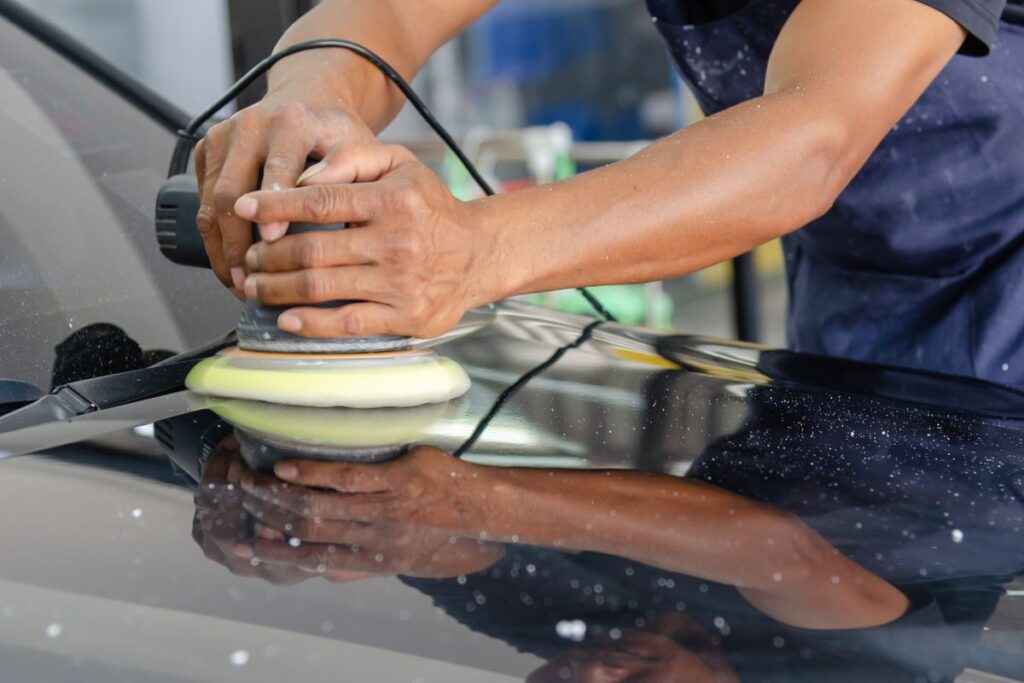
This is the most common and most expensive confusion in detailing. Paint correction removes defects — swirls, light scratches, oxidation — by machine polishing away a fraction of the clear coat. Ceramic coating adds a protective layer on top of the paint as it currently is.
Which means sealing a swirled, unpolished car locks the defects in under the coating. A reputable detailer will tell you that correction has to come first, and will quote both. If someone offers a cheap ceramic coating with no correction stage, ask what happens to the existing defects — the answer is that they stay, now under a coating that is difficult to remove.
Why Is Car Detailing So Expensive?
Detailing is almost entirely labour. There is no expensive part being fitted — the cost is hours of skilled hand work plus the equipment and consumables behind them.
For scale on the wage inside that price, the Bureau of Labor Statistics recorded a median hourly wage of $17.23 for cleaners of vehicles and equipment in its May 2025 release, across 380,430 workers nationally. The spread runs from $13.17 an hour at the tenth percentile to $22.89 at the ninetieth, which is itself a clue: the gap between a car wash attendant and an experienced paint-correction technician is most of the reason quotes vary. A detailer’s billed rate has to cover that wage plus payroll costs, a polisher and extractor, chemicals, insurance, premises or a van, and the hours nobody books. Skilled paint correction sits well above that baseline, which is exactly why it is priced separately.
What separates a $150 detail from a $400 one
- Hours. A quick interior and wash is two hours. A full detail with decontamination and a single-stage polish is most of a day.
- Decontamination. Clay bar and iron removal before any polishing, rather than washing and waxing over embedded contamination.
- Whether trim and jambs are done. Door shuts, sills, fuel flap and under the bonnet lip are where cheap details stop.
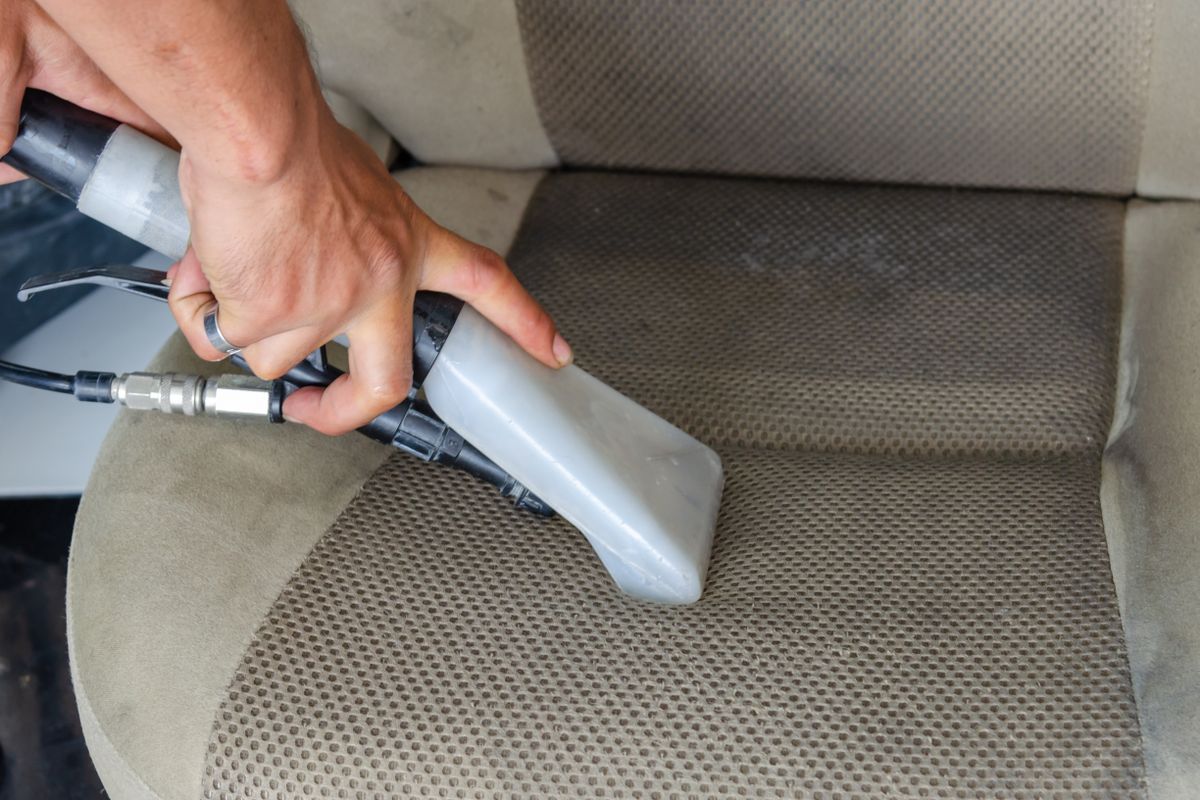
- Extraction versus vacuuming. Hot water extraction on carpets and cloth seats is a different machine and a much longer job.
- The products. A durable sealant lasting months costs more in both material and application time than a spray wax lasting weeks.
Is Car Detailing Worth It?
On pure economics, the case is about protection rather than appearance. Detailing removes embedded contamination and keeps a protective layer on the paint, which is what stops oxidation and slows the cosmetic decline that buyers price in. CostInsightHub frames it as $200 to $400 twice a year against a vehicle worth $30,000 or more.
The honest counter-case: detailing does not fix mechanical condition, and a coating on a car you are about to sell is money spent for the next owner. Before a sale, a standard detail usually pays for itself in presentation. A ceramic coating rarely does.
DIY versus professional
Washing, waxing and vacuuming at home is genuinely cheaper, and for a car in decent condition it covers most of what a standard detail delivers. The gap is not effort — it is equipment. Hot water extraction needs an extractor. Paint correction needs a dual-action polisher and the experience to know how much clear coat is there to work with. Those two jobs are the ones worth paying for, and they are exactly the ones that separate a $150 detail from a $400 one.
A reasonable split is to handle maintenance washes yourself and book a professional when the interior needs extracting or the paint needs correcting.
Is It Cheaper to Wash Your Car at Home?
Washing at home looks like the free option, and on cost alone it usually is. But there is a consequence that pricing guides never mention, and it is the strongest practical argument for using a proper facility.
Where driveway water actually goes
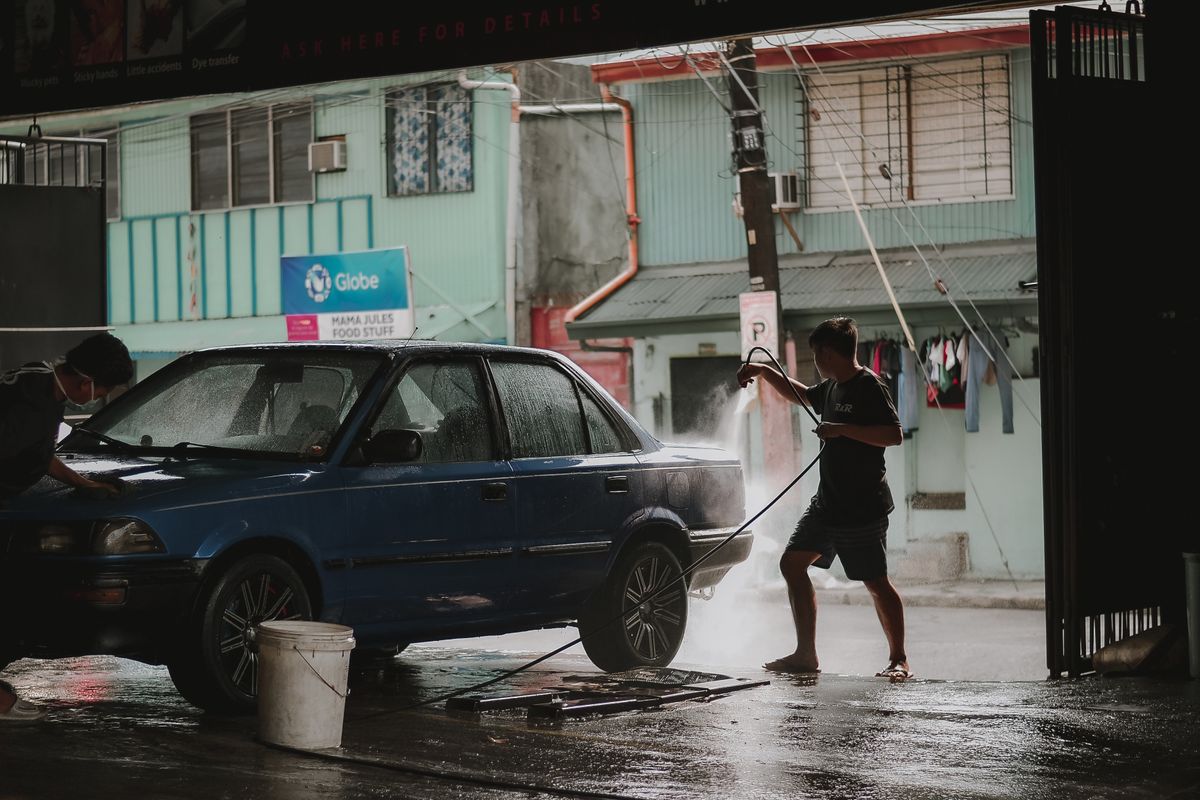
Storm drains are not connected to the sewage system. EPA stormwater material on car washing is blunt about the consequence: everything that washes into the storm water conveyance system goes untreated directly into rivers, creeks, bays and the ocean. When you wash a car on a driveway or street, the soap goes with metals and automotive fluids off the vehicle, down the gutter, picking up more street pollutants on the way.
Commercial operations do not have that option. They must control, contain and capture wash water before it leaves the site or enters a storm drain. If you do wash at home, the EPA guidance is to do it on the lawn or over a landscaped area so the ground absorbs the liquid and limits runoff, and to use a bucket and a hose nozzle rather than a running hose.
Water use, with real numbers
Commercial washing is also more measured than it looks. EPA’s WaterSense material cites a 2018 study finding conveyor washes used an average of 30 gallons of fresh water per vehicle, against 34 gallons in a 2002 study. In-bay automatics averaged about 43 to 45 gallons, and self-service washing the least at around 15 gallons per vehicle. Facilities running reclamation systems met a significant share of their needs from reclaimed water, with reductions ranging from 50 percent to as high as 83 percent.
Those figures are worth knowing before assuming a hose in the driveway is the environmentally lighter choice.
How to Spend Less Without Wasting It
Levers worth pulling
- Buy the tier you need, not the one above it. If the paint is fine and the interior is the problem, book an interior detail rather than a full one.
- Clear the car out first. Detailers charge for time, and half an hour removing your belongings is half an hour billed.
- Book before it gets bad. Maintenance detailing is far cheaper than restoration, and neglected paint eventually needs correction rather than polish.
- Skip ceramic coating on a car you are selling soon. It is a multi-year investment on a car you will keep.
- Ask about off-peak or slow-season rates. Detailing demand is seasonal, and mid-winter is negotiable in much of the country.
- Compare mobile against shop honestly. Mobile saves your time but carries travel charges and depends on weather and access to power and water.
Questions to ask before booking
- What exactly is included at this price, and what is extra?
- How long will the car be with you?
- Does the price change if the condition is worse than expected, and will you call me first?
- Is the interior extracted or only vacuumed? A good answer names the machine and the time: “hot water extraction on the carpets and cloth seats, that is why it is a five-hour job.” A bad answer is “we do a deep clean” — which is not an answer.
- Are your detailers certified through the International Detailing Association, or trained in-house?
- Does the exterior include decontamination, or just wash and wax?
- For a coating: how many correction stages first, and what is the written guarantee?
- Are you insured for damage while the car is in your care?
That last question matters more than people expect, and it is the same principle that applies to any work you hand your car over for — our guide to finding a good auto repair shop covers verifying a business before you leave the keys.
Frequently Asked Questions
Sources
- Car Detailing Finder — Car Detailing Cost, 2026 price guide
- Housecall Pro — Car Detailing Prices 2026
- US Environmental Protection Agency — Car Washing, stormwater guidance
- US Environmental Protection Agency — WaterSense at Work: Vehicle Washes
- Bureau of Labor Statistics — Occupational Employment and Wage Statistics, May 2025 (SOC 53-7061, Cleaners of Vehicles and Equipment)
- TopDetailers — How Much Does Car Detailing Cost in 2026
- Jobber — Car Detailing Prices 2026
- CostInsightHub — How Much Does a Car Detail Cost, 2026 US pricing
Run a detailing business? Ypages lists businesses across all 50 states, free — and people searching for what detailing costs are often looking for someone to book. Add your business free.
This article is general information. Prices vary by market, season and vehicle condition, and local rules on washing and wash water differ — get a written quote for your own car.