
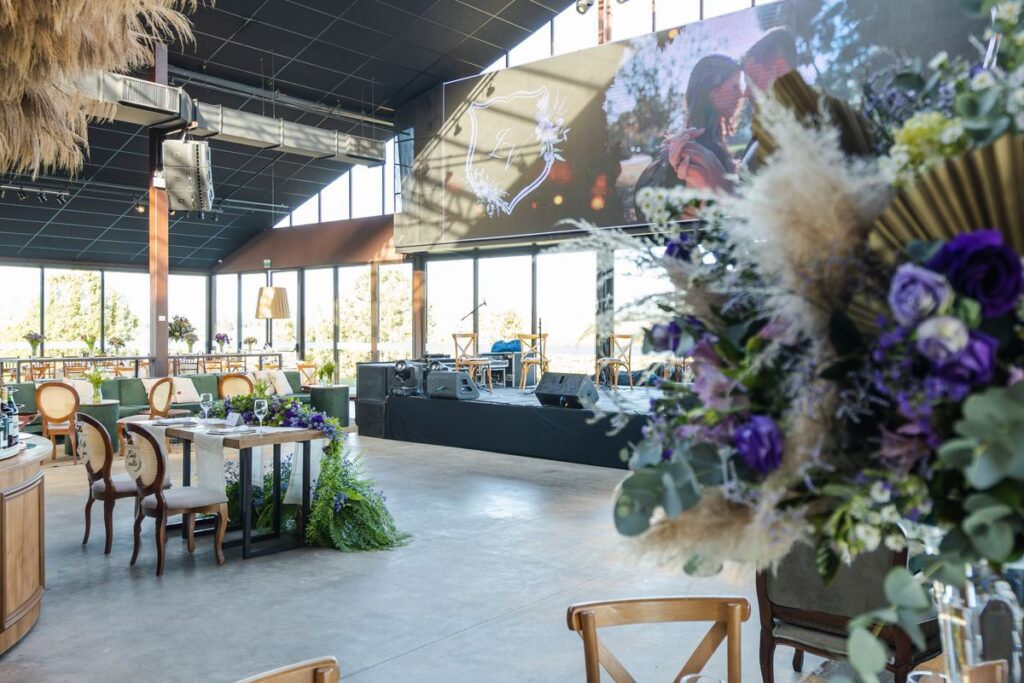
Last updated: September 2026
The venue is usually the single largest line in a wedding budget, and the published averages disagree by a wide margin. The Knot’s Real Weddings Study, covering 10,474 US couples married in 2025, puts the average wedding venue at $12,900. Zola’s 2026 figure is $8,573. Both are accurate — they are counting different things, and understanding what each one includes is the difference between a budget that holds and one that overruns by five figures. This guide covers what drives the number, what venues charge on top of the rental, the state-by-state spread, and two things about venue contracts that catch couples out every year.
Why the Two Big Numbers Disagree
This gap is the most useful thing on the page, so it is worth taking slowly rather than averaging away.
The Knot Real Weddings Study
Based on 10,474 US couples married during 2025, The Knot gives an average wedding venue cost of $12,900. Its quartiles show the real spread: $3,500 at the lower cost quartile, $10,400 at the median, and $24,800 at the upper quartile. That is a seven-fold range between the bottom and top of the market.
Zola Wedding Cost Index
Zola’s 2026 figure, drawn from its Wedding Cost Index and a 2026 spend survey of 720 couples married within the previous 180 days, is $8,573 nationwide, with couples typically landing between $6,900 and $10,300. Zola puts the venue at roughly 17 percent of a total wedding budget.
The gap is mostly about where catering sits. A venue-only rental buys the space, lighting, parking and restrooms. An all-inclusive package folds in tables, chairs, linens, catering and service staff — and once food and drink for a hundred guests are inside the venue line, the number roughly doubles. Neither study is inflating anything. They are measuring different purchases.
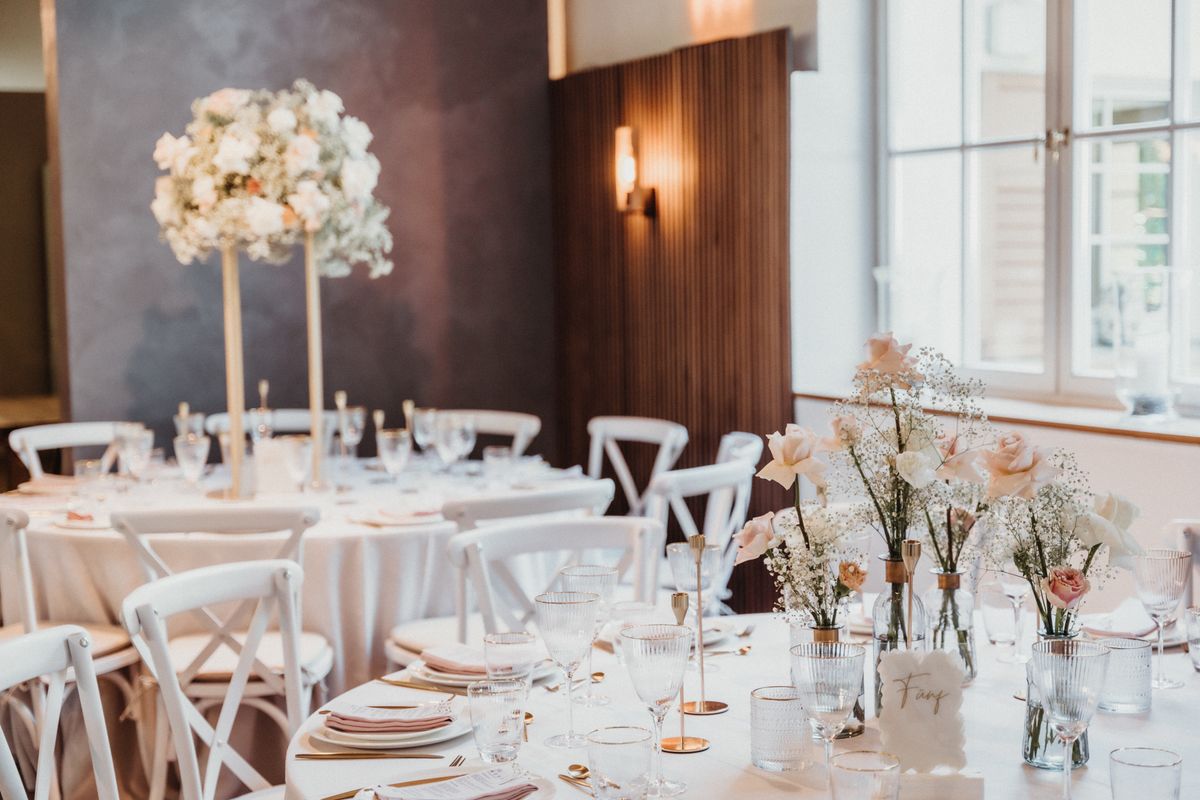
Cost by State and by Guest Count
Geography moves this line more than any other wedding expense. The Knot’s 2025 state figures run from $3,770 in Wyoming to $27,710 in New Jersey — a difference of more than seven times for the same category of purchase.
| State | Average venue cost |
|---|---|
| New Jersey | $27,710 |
| New York | $21,300 |
| Massachusetts | $19,180 |
| California | $15,310 |
| Wyoming | $3,770 |
Guest count is the lever you control
The Knot’s averages by size are $6,500 for 1 to 50 guests, $10,400 for 51 to 100, and $16,000 for 101 or more. Cutting the list is the most powerful cost lever in the entire wedding budget, because guest count drives the venue, the catering, the bar, the rentals and the stationery all at once. Twenty fewer guests is not a twenty-person saving; it compounds across every per-head line.
That 22% service charge is not a tip
Venues commonly add a service fee of 18 to 25 percent to the final bill, and couples routinely assume it is the gratuity and then tip again on top. The IRS is clear that it is not a tip: a payment is a tip only if the customer voluntarily decides to pay it and determines the amount. An automatic charge added to a bill — the IRS gives a mandatory 18 percent charge for large parties as its own example — is a service charge, and when distributed to an employee it is generally treated as wages paid by the employer rather than tips paid by the customer. So ask the venue directly whether any of it reaches the staff working your wedding, and budget your tipping accordingly.
What Venues Charge on Top of the Rental
The quoted rental is rarely the total. These are the additions that turn a $9,000 quote into a $13,000 invoice.
| Charge | Typical shape | What to ask |
|---|---|---|
| Service fee | 18–25% of the final bill | Is it on the food only, or on everything including rentals? |
| Cake cutting | $2–5 per guest | Waived if you buy the cake through them? |
| Corkage | $15–25 per bottle | Is bringing your own wine even permitted? |
| Overtime | Per hour, often steep | What time does the music have to stop? |
| Vendor meals | Per vendor | How many are required, and at what rate? |
| Sales tax | Varies by state and locality | Is the quote before or after tax? |
Notice how these stack. A service charge calculated on the whole bill rather than on food alone can add well over a thousand dollars by itself, and it is usually taxed too. Ask for a sample final invoice from a real wedding of similar size — not a price list, an actual invoice with the fees applied. Venues that are straightforward about pricing will produce one.

Cost by Venue Type
Zola’s 2026 data describes how venue categories sit relative to the national baseline, which is a more durable guide than any single dollar figure.
| Venue type | Relative to the national baseline |
|---|---|
| Hotels and resorts | About 2.5 times the baseline |
| Vineyards and wineries | About 2.3 times the baseline |
| Banquet halls and ballrooms | Mid to luxury range, and the most popular choice |
| Barns and farms | Almost exactly at the national average |
| Gardens and outdoor spaces | Below the baseline |
Cheap venues are not always cheaper
A garden or a hall with a low rental fee often comes empty. Tables, chairs, linens, a catering kitchen, lighting, power, restrooms, a wet-weather plan and sometimes a marquee all have to be brought in. A hotel at three times the rental may include every one of those and be cheaper in total.
The only way to compare is to price the same complete wedding at each. Build a single list — catering, bar, tables, chairs, linens, lighting, restrooms, parking, staff, setup and breakdown — and ask each venue which items their number already covers.
Two Checks Most Couples Skip
Neither of these is about money directly, and both can cost you a great deal if missed.
Capacity, as the fire authority defines it
A venue’s marketing capacity and its legal occupant load are not always the same figure, and the marketing number often assumes a standing reception rather than a seated dinner with a dance floor and a band. Ask for the posted occupant load rather than a sales figure, ask what it assumes about layout, and if your guest list is anywhere near the limit, confirm it with the local fire marshal’s office. This is a five-minute call that prevents a genuinely serious problem.
Accessibility
Under Title III of the Americans with Disabilities Act, businesses that serve the public must give people with disabilities an equal opportunity to access the goods and services they offer. The Department of Justice notes the law applies to almost all types of businesses that serve the public, regardless of their size or the age of their buildings, and that covered businesses must remove architectural barriers where it is readily achievable to do so, follow design standards for new construction and alterations, make reasonable modifications to policies and practices, and allow service animals despite a no-pet policy.
In practice, walk the route a guest using a wheelchair would take, from the car park to the ceremony seating to the bar to the restroom, and check every step of it. Barn and historic venues are the ones most likely to have a gravel path, a single step at a threshold, or restrooms up a flight of stairs. Ask specifically about accessible parking, a step-free route, an accessible restroom, and whether a guest who cannot manage stairs can reach the top table.
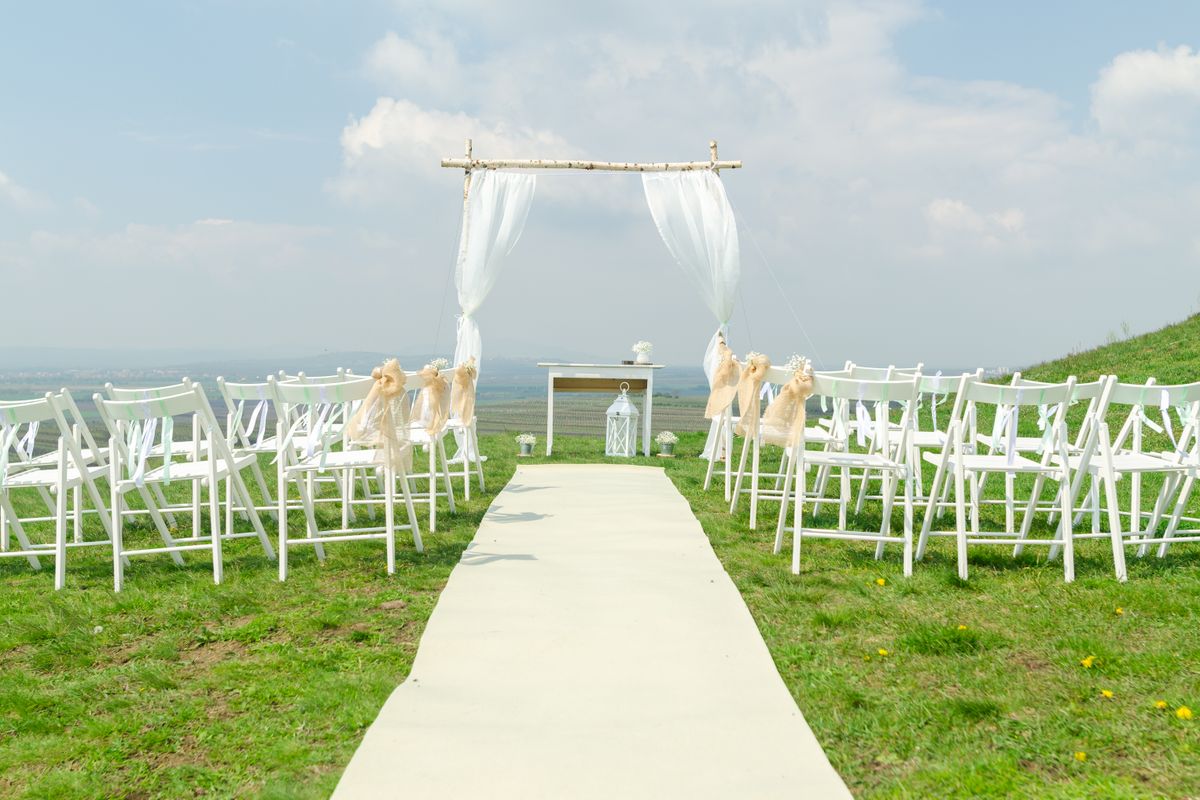
How to Bring the Number Down
Some levers change what you pay without changing the day much. Others change the day a great deal.
The levers worth pulling first
- Cut the guest list. The most effective lever by a wide margin, because it compounds across every per-head cost. The Knot’s own figures show the venue average falling from $16,000 at 101-plus guests to $10,400 at 51 to 100.
- Move off a peak Saturday. A Friday, a Sunday or an off-season month is often the same venue at a materially lower rate.
- Hold the ceremony and reception in one place. One rental, no transport, no second setup, and fewer hours billed by every vendor.
- Negotiate the fees, not the rental. Rental rates are often fixed, but cake-cutting fees, corkage and vendor meal rates are frequently waived or reduced.
- Look at daytime. A lunch reception costs less than an evening one in catering, bar and lighting all at once.
Questions to ask every venue
- What exactly does the rental include, and what is billed separately?
- Is the service fee calculated on food only or on the whole bill, and is it taxed?
- Must we use your caterer and bar, and what happens if we do not?
- How many hours do we have, including setup and breakdown, and what is overtime?
- Is there another wedding on the same day, and do we share any spaces?
- What is the wet-weather plan, and does using it cost extra?
- What is the deposit, the payment schedule, and the cancellation and date-change policy?
- What insurance do you require from us and from our vendors?
Once the venue is settled, the rest of the budget follows from it. Our companion guides cover what a wedding photographer costs, how to choose one, and how to choose a catering company if your venue lets you bring your own.
Frequently Asked Questions
Sources
- The Knot — The Average Wedding Venue Cost, from the Real Weddings Study of 10,474 couples married in 2025
- Zola — Average Wedding Venue Cost, Zola Wedding Cost Index and 2026 Wedding Spend Survey
- Internal Revenue Service — Tip recordkeeping and reporting
- US Department of Justice — ADA Title III: Businesses That Are Open to the Public
Run a wedding venue? If you can produce a real sample invoice with the fees applied, a free Ypages listing puts you in front of couples who want exactly that kind of straight answer. Add your business free.
This article is general information, not financial, tax or legal advice. Prices vary by market and season, and venue contracts differ — read your own before signing. Accessibility and occupancy requirements are set by federal law and local codes; confirm anything specific with the venue and your local authority.